
Jeju is a Korean island located Southwest of the mainland. It is known for its wind, rocks, and women . The wind is constant up from the coasts and down from the mountain. Volcanic rocks are found in abundance. The woman are strong divers renowned throughout the world. I was privileged to have been able to visit last year.
As a biology major in college, I studied ecology and how different soils can change flora and fauna from the microscopic level. When I visit any distant islands, I am in awe of the diversity in geomorphology and have geeked out over stones on more than one occasion. Throughout this island, you’ll see rock walls everywhere. These walls have stood for generations to block the winds, separate property, redirect water flows, and contain horses. They are iconic, and I found them mesmerizing. I’m told experts have traveled here to understand how these ancient walls have stood for centuries without the use of any adhesive.
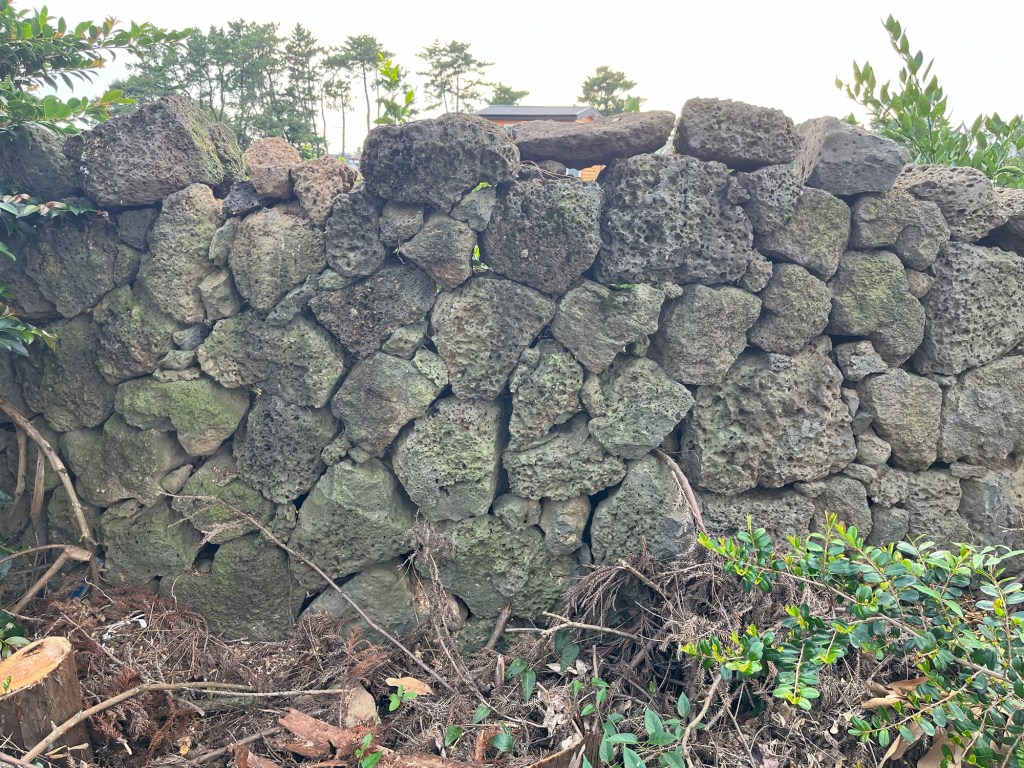
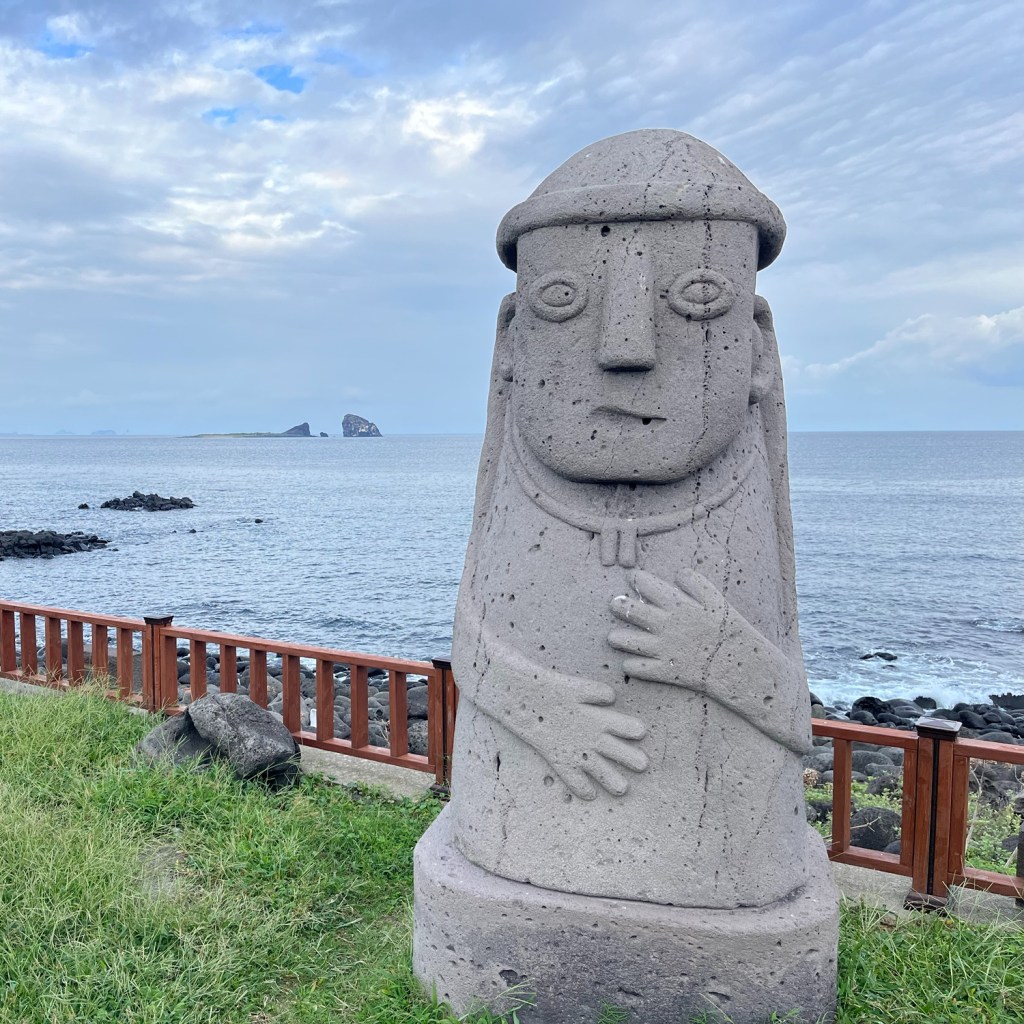
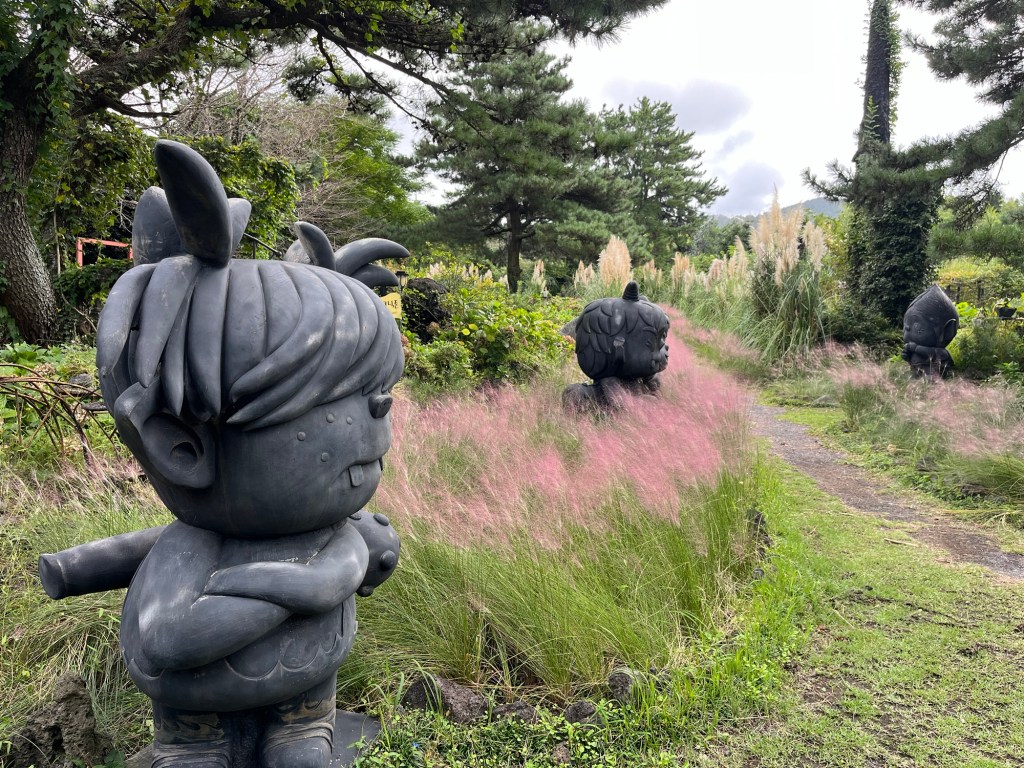
The basalt rocks are light to carry and are filled with tiny holes. I kept one smaller rock for myself that I found on the beach to remind me of the complexity of life on earth. All over Jeju are stone grandfather statues (dol hareubang) made of dark lava rock. They appear on street corners, at parks, in yards, in stores, on the beach, and just about anywhere you go. They provide a sense of protection, as if you are constantly being watched over. I think of them as peaceful guardians of the island. Traditionally, they are supposed to ward off demons and promote fertility.
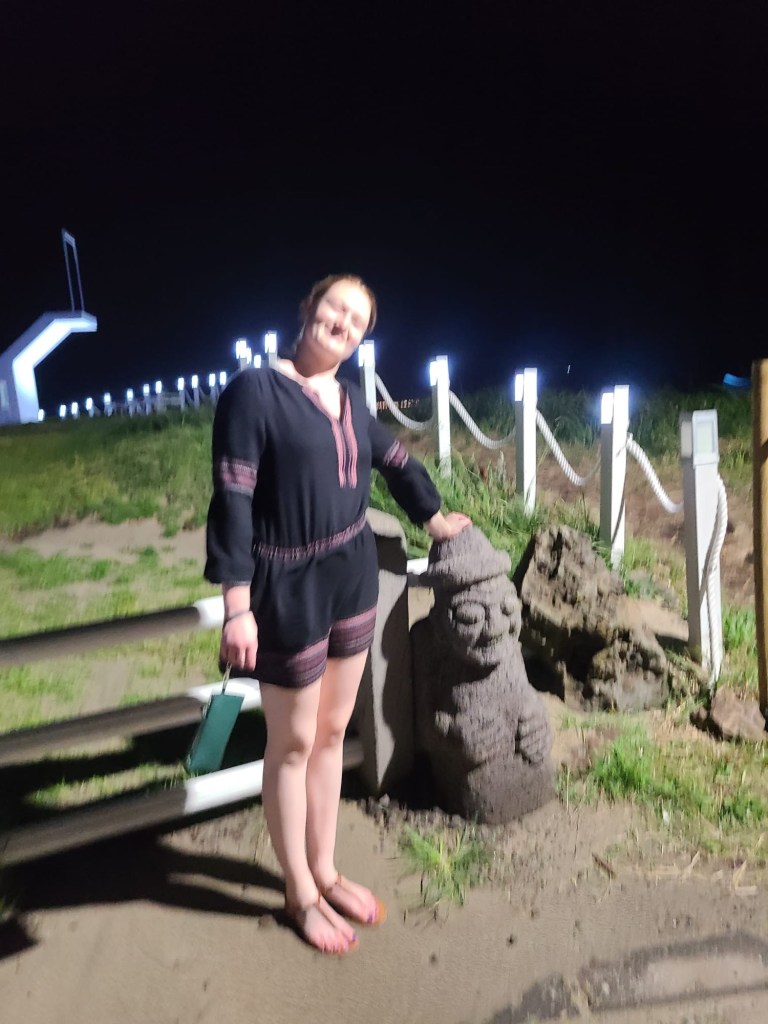

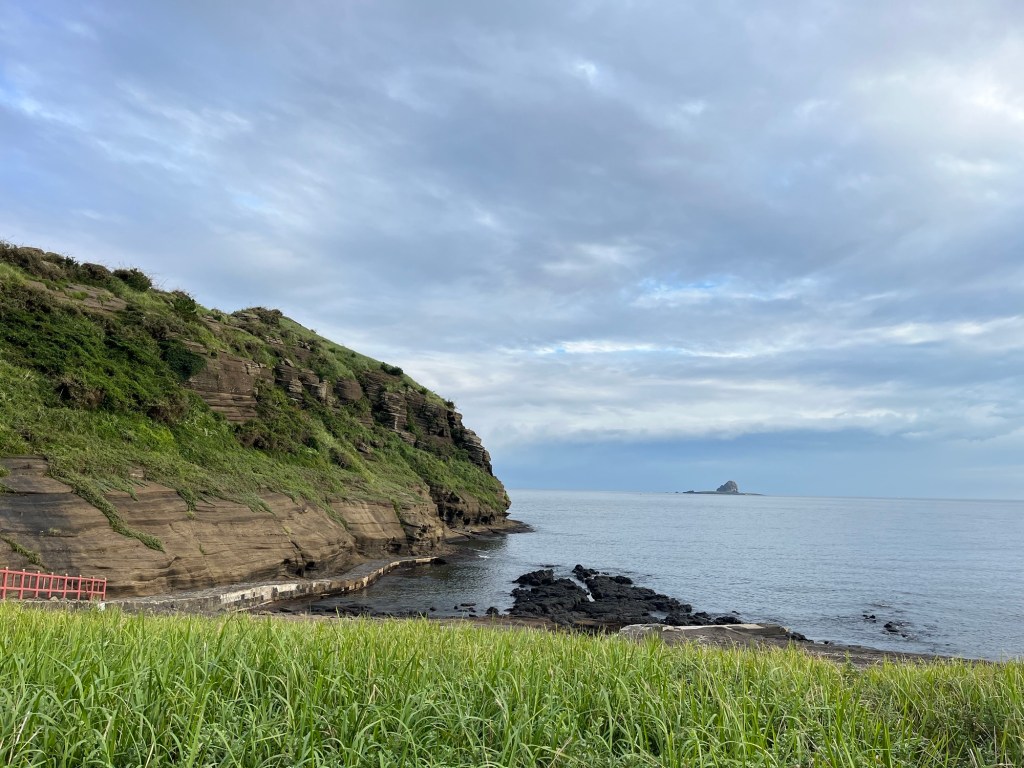
The black sand beaches in combination with the oreums (small cone-shaped mountains/large hills that can act as a side vent for Hallasan, the main volcano on the center of the island) were absolutely gorgeous. We climbed Seongsan Ilchulbong on the Eastern end of Jeju for a beautiful view of a volcanic crater over the ocean. It is a popular place for a sunrise hike, but we went later in the day due to weather concerns.
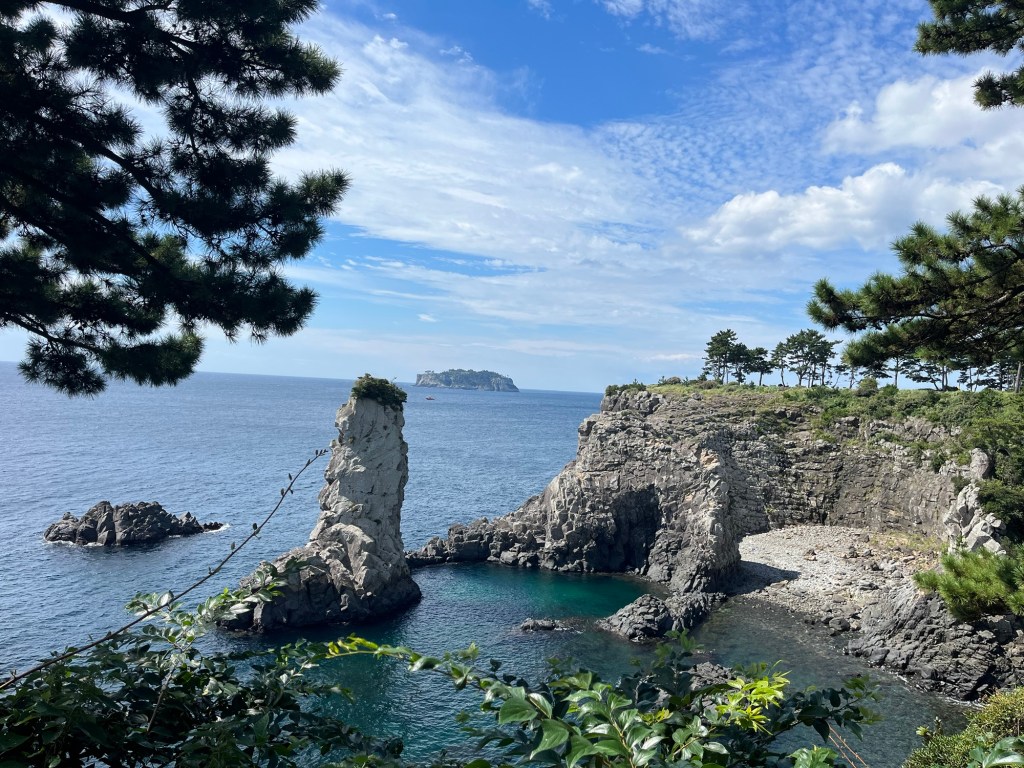
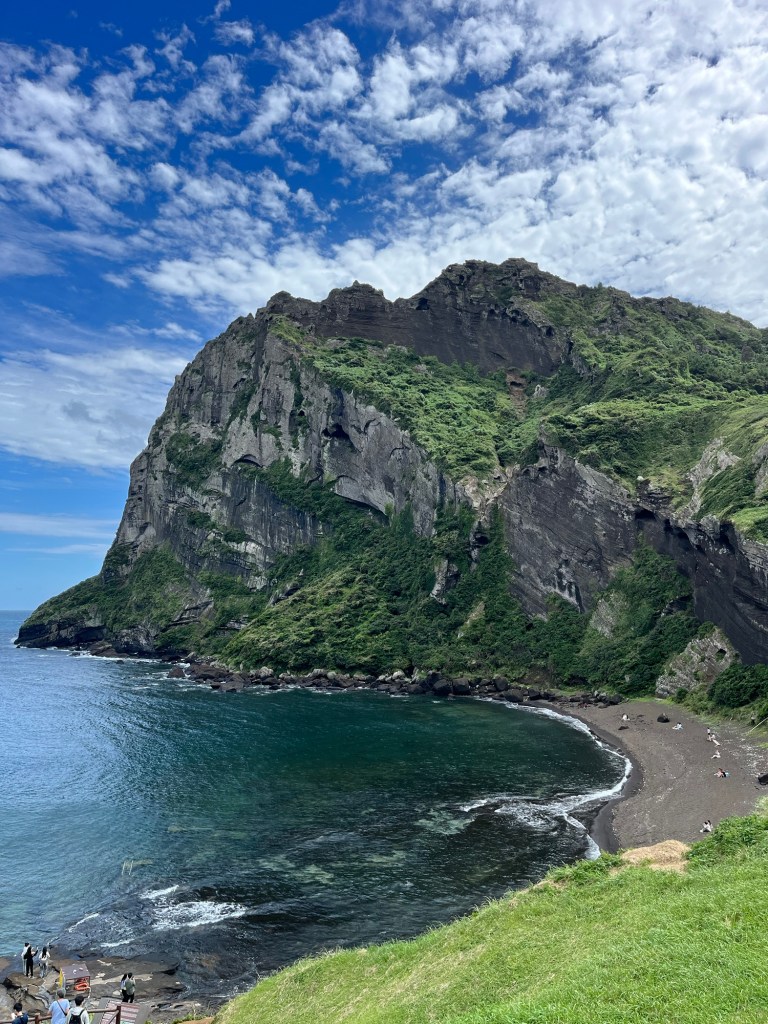
Historically, women were found in excess in Jeju for a couple reasons. The men were sent off for education and opportunities while the women were expected to work and maintain the households. Men were also conscripted into armies and taken away for wars, never to return. Women who lived in coastal villages often became haenyos. Haenyo is a term specifically for female free divers (diving without oxygen). We got to see a group of these divers in action at the beach near Seongsan. One came back with a live octopus she had caught!

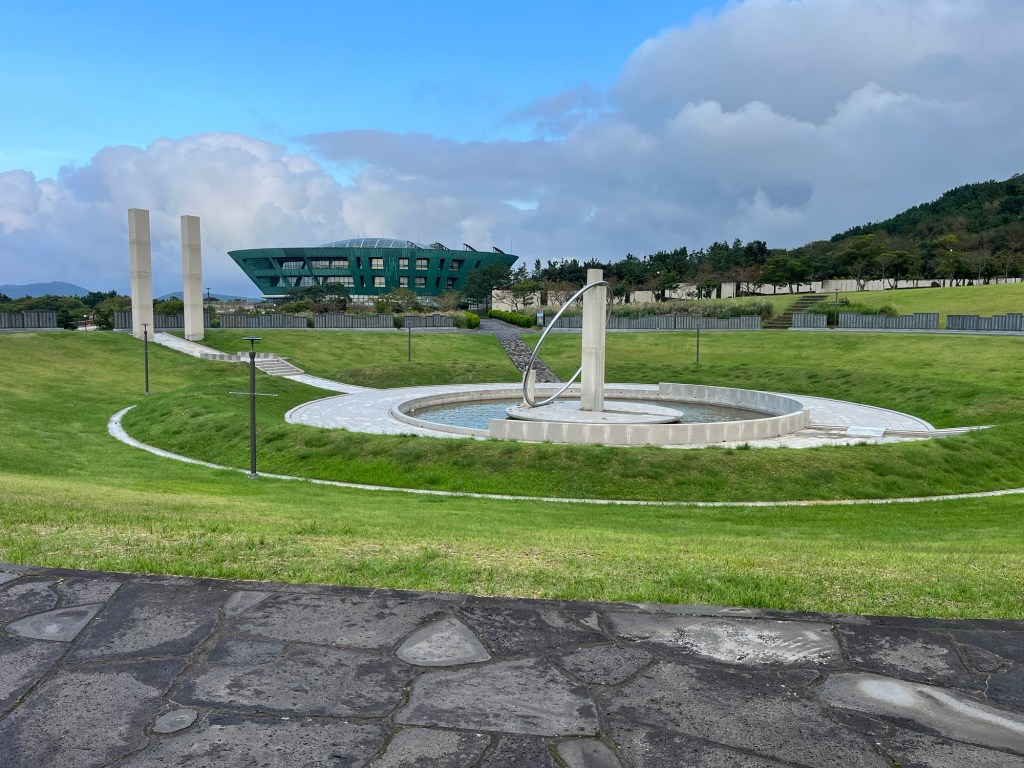
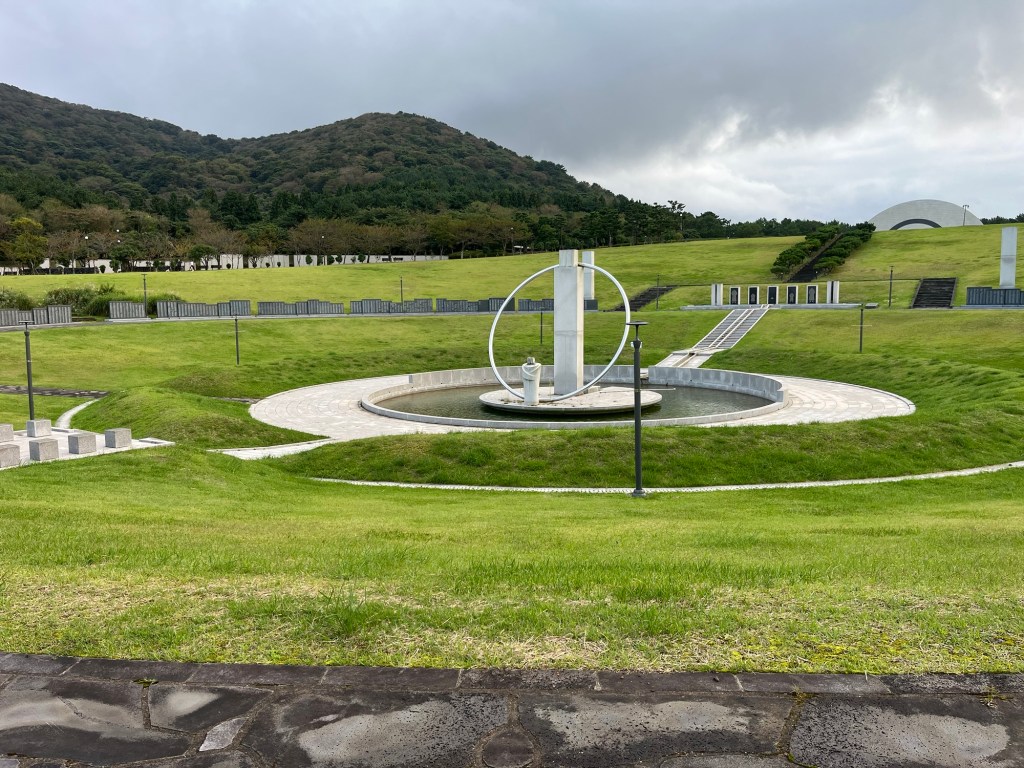
On our last day here, we visited the 4.3 Peace Park. I learned about some disturbing things that occurred here after WW2 ended and during US occupation just before the Korean War. Witnesses and survivors of what is now called the 4.3 Incident could not legally speak of the events for decades, so the truth of how and why these things happened may never come to light. What we do know is that thousands of men, women, and children were killed in Jeju indiscriminately between April 1948 and May 1949. Various reports say between 10 and 30% of the entire population of the island were wiped out from the beginning to end of the “Incident”.
During this time, most of the mountain villages were erased off the map (literally burned to the ground), and crowds were forced off cliffs into the ocean. Some villages had no surviving adult men when it was over. The incident has also been called the Jeju Uprising because the soldiers believed they were squashing rebel forces. Reports found the US military not only witnessed and ignored the massacres but may have also encouraged the events, thinking there were Northern sympathizers hiding among the villages. The Peace Park presents what details are known and attempts to honor those that died. Monuments and apologies cannot fully fix the decimation that occurred here 70+ years ago, but it’s a start toward reconciliation.
This post is not intended to be political, but rather an overview of my personal experience in Korea. My history courses did not cover much from this part of the world, and I honestly did not know much of the culture or cuisine before I came. Every piece of information was fascinating to me. There is so much more I could recollect if I wanted to. Museums of almost anything (teddy bears to Grimm’s fairy tales). Dolphin sightings along quiet roads up the coast. Colonel Sanders statues appearing in the night. The “Mysterious Road” attraction created because of an inexplicable bump in the road… I am lucky to have been able to visit this amazing island, eat the food, climb the oreums, and buy little souvenirs. Someday I’ll return to explore more of the history.
-all these are my own photos.
 DragonMaster
Leave a comment